
Meet the Writer: Mary Saracino – Grab the Lapels
MARCH 4, 2021GRAB THE LAPELS
Meet the Writer: Mary Saracino
Meet the Writer is a feature for which I interview authors who identify as women. We talk less about a single book or work and more about where they’ve been and how their lives affect their writing. Today, please welcome Mary Saracino. Saracino is a teacher and mentor, academic and freelance writer, all in addition to her creative writing projects. You can learn more about Saracino at her website. I recently bought a copy of the author’s book The Singing of Swans and am excited to read it!
Grab the Lapels: What was the first piece of writing you did that you remember being happy with?
Mary Saracino: Well, jokingly, when I was a young girl, I was supposed to be taking a nap but I couldn’t sleep, so I pre-occupied myself by taking a safety pin and scratching the lyrics to “On the Good Ship Lollipop” into the wooden headboard of my parents’ bed. It was very satisfying, even though my mother was not amused. On a more serious note, the first piece of writing that I felt very happy about was a memoir piece I wrote for a writing class I was taking at a community center in the late 1980s in Minneapolis, MN where I was living at that time. That piece would eventually morph into my first novel, which was published in 1994. However, the first memoir piece that I wrote that was published was “On Being Italian-American: An Introspection.” It was published in Sinister Wisdom, Issue 41, summer 1990, Janet Capone and Denise Leto, guest editors.
GTL: What did you want to be when you grew up, and does this choice influence your writing today?
MS: I wanted to be a June Taylor dancer . . . the dance troupe of women on The Jackie Gleason Show . . . or a Rockette. I grew up in western New York state, so I was very familiar with the Rockettes, and I was enthralled with their dancing. I don’t think that directly influenced my writing today, other than I have always been drawn to creative pursuits.
GTL: Are there aspects of your writing that readers might find challenging to them?
MS: My work deals with story lines and themes that reflect the reality of women’s lives and breaking silences about the many ways in which women have been oppressed throughout history. That might challenge readers. Some of my work also often deals with grief and lossand overcoming those to reclaim one’s authenticity. That might be challenging for readers, too. Even so, my work is about healing and overcoming obstacles, so ultimately, it’s about the capacity for resilience. My goal is to always tell a good story; to show, not tell, not preach.
GTL: What is your writing process like? Which do you favor, starting or revising?
MS: I would say I favor starting over revising, although I value the revision process. In terms of my writing process, I don’t have a set method or time that I set aside to write, but when I have a story idea I want to write about, or a character that “speaks” to me, asking me to write her story . . . or some topic I want to explore, or a poem enters my heart and head and I have to write it down, I get to work. I think it’s essential to get that all down on paper (or the computer screen) uncensored for the first draft.
Then, I dive in, immerse myself in the process and surrender to it, listening for how it all wants to unfold, listening for what the characters have to tell me about their lives. Sometimes I start in the middle of the story without knowing the beginning or the ending. Other times I start at the beginning without knowing what comes next. I never outline a novel. I don’t edit anything in the early stages of getting it all down. Editing is the final stage for me.
GTL: How has your writing process evolved?
MS: I’ve been a published author (novels, poems, memoir, essays) for thirty-one years, so it has definitely evolved. I feel more confident about my ability now than I did when I first began. When I wrote my first novel, No Matter What (Spinsters Ink 1994), I didn’t know how to write a novel. At that point, I had only written poems and shorter memoir pieces and a few short stories. I had no clue. But I felt compelled to tell a specific story, and a novel was the only way to do that. So, I dove in and did it anyway. I just kept persevering and getting input and feedback from the writing group I was in at that time. And I took writing classes at The Loft in Minneapolis to hone my craft. I had some very fine teachers there, especially Judith Katz, who mentored me and encouraged my work. I was also fortunate to have been chosen as one of the writers in the Loft’s Mentor Series program where emerging fiction writers and poets worked with nationally-known novelists and poets. The mentoring I received helped me hone my craft.
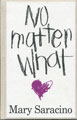
After No Matter What was published, I was also given the opportunity to immerse myself in two writing residencies at Norcroft: A Writing Retreat for Women in Lutsen, Minnesota (which has since closed), where I had the time and freedom to focus on my art. Joan Drury, the woman who founded Norcroft, also published my first two novels, No Matter What and Finding Grace, and my memoir, Voices of the Soft-bellied Warrior. She believed in my writer’s voice, and in women writers’ voices — which also gave me confidence to continue my work and explore the topics I was most interested in writing about.
In the beginning, like many emerging writers, I wrote about my lived experience as a female, and as the granddaughter of Italian immigrants, and as an Italian-American feminist lesbian. As I evolved as a writer, I also became interested in writing about the female experience in a wider sense and to explore the many ways in which women’s voices have been silenced and how our lives have been devalued, our stories deemed less interesting, less valuable than the stories men write about. For far too long, women in literature have been viewed through the gaze of men. Thus, they not the subjects (protagonists) of the stories. I am interested in writing about women through their own perspectives. We have so many varied stories to tell.
In graduate school at the University of Minnesota in the late 1970s, I took a course on comparative religions and read Merlin Stone’s book When God Was a Woman and Mary Daly’s books Beyond God the Father and Gyn/Ecology. Having grown up Catholic, these books opened my heart and mind to a whole other reality . . . and given that I am a feminist, I was drawn to learning more about the ways that the female face of the divine has been erased, or at least submerged. Thus, I began to conduct research on the divine female, studying the herstory of female-centered spirituality in all its many manifestations, which lead me to write The Singing of Swans and Heretics: A Love Story, both published by Pearlsong Press.
Taking that leap as a writer was necessary for me, but also risky. Not many publishers want to publish fiction that deals with these topics. Peg Elam didn’t flinch. She has been a wonderful editor and publisher. She has been a strong supporter of my work, which is so important for a writer — to know that her editor/publisher believes in her work. Prior to writing the two novels published by Pearlsong, in addition to doing extensive research on the divine female, I also did onsite visits to Sicily and Sardinia as a form of creative/cultural fieldwork, to learn more about the sacred sites there that are devoted to the divine female. Thus, my writing process evolved as I grew as a human being and as a woman, and as an artist. I began to explore more deeply the things that have been submerged in our culture — especially around the lived experiences of women — to empower women and to remember what has been submerged so others could reclaim what has been lost.
GTL: What would you like readers to know about your most recent publication from Pearlsong Press, Heretics: A Love Story?
MS: Heretics: A Love Story is a story about intolerance and redemption; ultimately, it’s about how only love can conquer fear and hatred. I firmly believe that writing is a visual art. Writers paint pictures/images in the minds of their readers, so I always strive to do that with my work. Heretics is no exception. The first chapter opens with a vivid dream that Shardana, one of the main characters, is having, that foretells what is to unfold in the novel. The novel was inspired by a trip I took in 2004 to Sardinia as part of a Dark Mother study tour lead by my mentor, Lucia Chiavola Birnbaum, a cultural historian and professor emeritus who taught in the Women’s Spirituality graduate program at the California Institute of Integral Studies in San Francisco. Our group travelled around the island visiting sites that were sacred to the divine female and learning about the cultural history of Sardinia.
A similar trip with Lucia to Sicily in 2001 inspired The Singing of Swans. In Swans, I wanted to write a contemporary story that was immersed in archetypal lore, weaving in elements of magical realism. The novel even has chapters in the voice of a sacred lake in Sicily. In Heretics, I went full-blown historical and set the story in Sardinia in the 1480s during the time of the Spanish Inquisition to explore issues related to intolerance and the suppression of non-canonical traditions. The main characters are two female healers in a small town in the mountainous region of the island who must deal with a Catholic priest who has been exiled to their town. My interests in the divine female also led me to co-edit the anthology, She Is Everywhere! Volume 3: An anthology of writings in womanist/feminist spirituality, with Mary Beth Moser, a friend and colleague whom I met on the 2004 trip to Sardinia.
The Dr. Pat Show. Interview with Mary Saracino and Mary Beth Moser co-editors of the She Is Everywhere, Volume 3 anthology.
 marysar1004


